

 English
 Español

news
Home / News / Industry News / Chain Oil Pump: How Chainsaw Bar Oiling Works, Fails, and Gets Repaired
Home / News / Industry News / Chain Oil Pump: How Chainsaw Bar Oiling Works, Fails, and Gets Repaired

Content
Two burned bars in one season is usually the point where a landscaping crew starts blaming the chain. The chain is rarely the culprit. When the bar rails turn blue, the drive links come back polished and dry, and the oil tank is still half full after a morning of cutting, the chain oil pump has stopped feeding the bar. A pump costs a fraction of the bar and chain it protects, which is why it is worth understanding before the next saw goes down mid-job.
The short version: the pump draws oil from the tank, pressurizes it and pushes it through an outlet beside the bar pad. From there the drive links carry the oil around the bar groove to the nose sprocket. Everything downstream, the groove, the rails, the chain and the sprocket, survives only as long as the pump keeps pace with cutting speed. Thirty seconds of dry running at full throttle is enough to score a bar beyond repair.
On a gasoline saw the pump is driven by the engine. A worm gear on the crankshaft turns a pinion that drives the pump plunger or rotor, so oil output rises and falls with engine speed: a trickle at idle, the working rate at full throttle. Most saws carry an adjustment screw or dial on the crankcase so flow can be matched to bar length, and many add a manual thumb plunger that delivers an extra shot of oil during long bucking cuts.
Chain oil does two jobs at once. It lubricates the contact between the drive links and the bar rails, and it flushes heat and sawdust out of the groove. Bar-and-chain oil is deliberately tacky, because it has to cling to a chain travelling at 20 metres per second instead of being flung off at the sprocket. That same tackiness is why pickup filters and oil channels clog long before a pump wears out.
Three designs cover almost every saw sold today, and each one fails differently. Identifying yours shortens diagnosis considerably.
| Design | Drive | Typical output | Usual failure | Service approach |
|---|---|---|---|---|
| Plunger or piston pump | Worm gear on the crankshaft | 3-10 ml/min at full throttle, adjustable | Worn worm gear, stuck plunger, blocked channel | Replace pump and worm gear as a set |
| Gear rotor pump | Crankshaft | 10-20 ml/min, suited to long bars | Scored rotor faces, suction-side air leak | Clean and reseal, replace if scored |
| Electric pump | Solenoid or small motor on the control board | 2-8 ml/min, often load-controlled | Blocked nozzle, failed solenoid, board fault | Test electrically before replacing parts |
Gasoline saws overwhelmingly use one of the first two types, driven straight off the crankshaft. Battery saws use the third: an electronically driven pump whose flow varies with load or speed rather than engine rpm. Hybrid layouts exist, but the drive method is what decides both the symptom you see and the repair you make.
A 20-inch gasoline saw is a useful reference point for pump sizing, because the groove is long enough that flow has to be right rather than merely present. The saw below runs a crankshaft-driven plunger pump with an external adjustment screw, so a dry bar can be corrected without opening the crankcase.
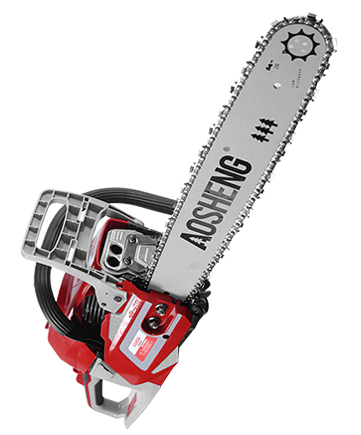 AS5200A 20inch ChainsawNew design cover, fashion.View Product →
Specification sheets rarely state oil output, so field checks do the work. Two are enough for most workshops.
For consumption, one rule of thumb works well: one tank of bar oil per tank of fuel when cutting continuously with a mid-length bar. A 16-inch saw uses noticeably less, while a 24-inch bar in hardwood uses more, and the adjustment screw should be opened to suit. If the oil tank empties twice as fast as the fuel tank, flow is set too high, and the saw smokes, attracts grit and wastes oil. If the fuel runs out first, open the screw a quarter turn and retest.
Lithium saws replace the worm gear with a small solenoid or motor pump wired to the control board. Output is lower, typically 2 to 8 ml/min, and it is often modulated by load. That brings real advantages, such as no output at idle and no mechanical wear from the crankshaft, along with its own failure pattern: a blocked nozzle, a failed solenoid, or a control board fault that cuts power to the pump while the saw still runs perfectly.
Viscosity matters more on these saws. Cold, thick oil may not prime through a narrow pump channel on a winter morning, so a thinner winter-grade bar oil protects the mechanism as much as it protects the bar. A cordless saw with electronic oiling and a 16-inch bar is shown below as a typical platform for this design.
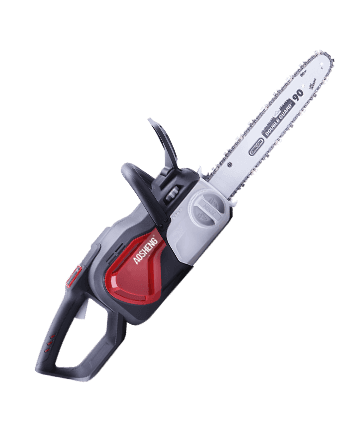 A40LJ16B01 40V 16inch Lithium-ion ChainsawTool-less chain tension systemView Product →
In practice the pump body is rarely the root cause. Field returns usually trace back to one of these:
Pump assemblies look interchangeable and are not. Two saws with the same bar length can differ by a factor of three in oil output, and that gap shows up later as warranty claims about burned bars and stretched chains. When specifying a chainsaw range or a replacement pump, these are the points worth pinning down:
Production that starts in a die-casting shop and continues through injection moulding, precision machining and a test centre for the core components of gasoline engines and lithium battery packs makes it practical to hold these tolerances. With annual output of roughly 600,000 units, matched pump and worm gear assemblies can be supplied as service parts long after the original tool shipment.
These checks fit naturally into a wider chainsaw maintenance routine, and they take far less time than replacing a bar.
A chain oil pump is not a wear item to be swapped on a schedule. It is a small metering device that either matches the cutting load or quietly destroys the parts around it. Checking flow at the outlet once a week, adjusting the screw when bar length changes, and keeping the pump and worm gear as a matched pair will keep bars and chains in service far longer than any change of budget or brand.
If you are specifying chainsaws for a distributor range, a municipal contract or an OEM programme, the flow data, material specifications and test reports behind each pump assembly matter as much as the saw itself. Our team can share pump flow curves, spare parts lists and warranty terms, so reach out through the contact page and we will match a saw specification to your cutting conditions.
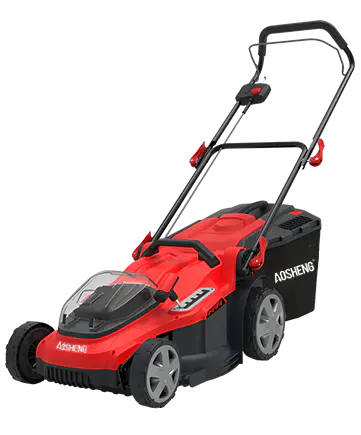
Deck Size:40CM/16INCH 3-in-1 function: Mulching, rear bagging&side discharge Easy-to-use fold-in system
See Details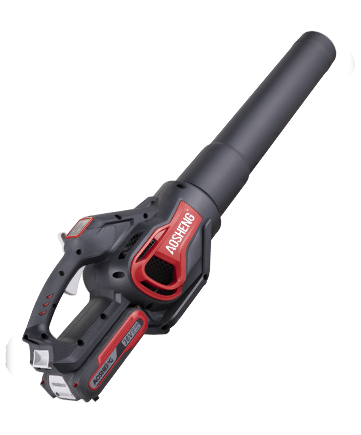
Turbine boost functionBig air volumeInstant startBackpack option for extra battery power
See Details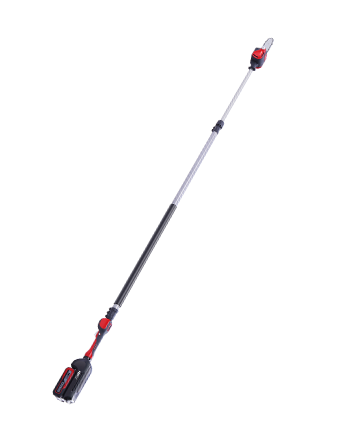
Extension height of 400cmOregon Bar & ChainTool-less chain tension systemAutomatic oiling systemBackpack option for extra battery power
See Details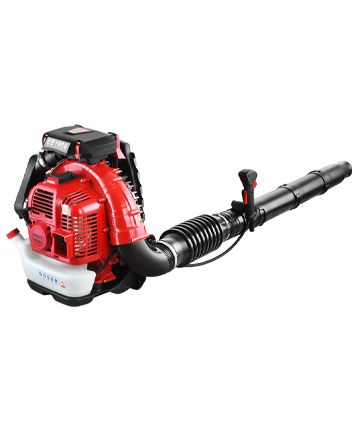
Extremely comfortable adjustable handle Large capacity fuel tank The largest air volume in China Use fire-retardant pipes to extinguish the fire Luxury widen & thicken straps Patented engine reac...
See Details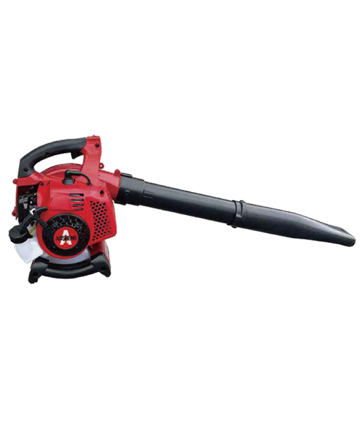
Suction and blowing Euro 5 certification Rubber-coverd handle, Strength nylon collecter.
See Details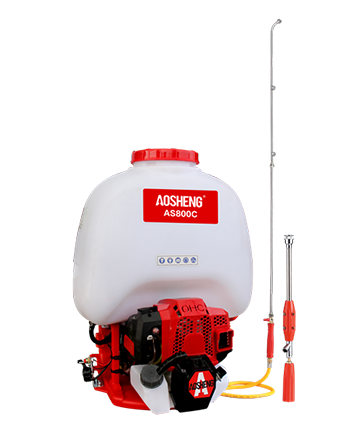
High preformence engine with high quality accessories. Copper meterial pressure pump, corrosion resistance.high atomization effect. Used in agriculture,eqidemic prevention, and disinfection.
See Details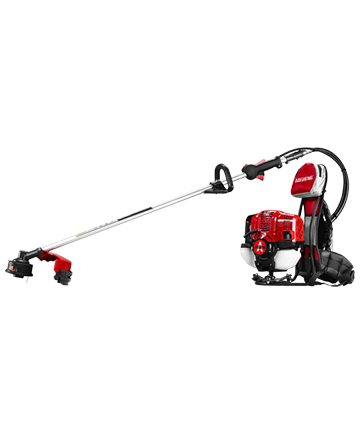
Professional engine, strength power.low consumption, easy to start.Rotating 360°Comfortable control handle and sponge belt. The trimmer head can offer a 460mm cut width. alloy blade diameter is 10 inc...
See Details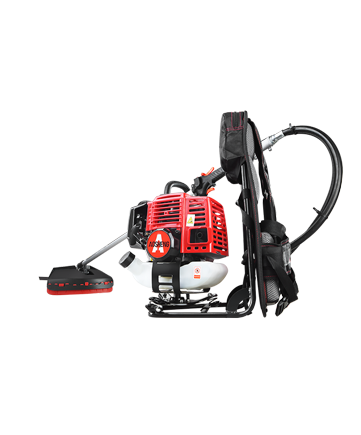
High-performance engine, displacement is 33CC.Professional use opens up wastelandTube size 26mm*1.5mm, strength flexible shaft.Cutting width is 420mmLifetime over 150hours
See Details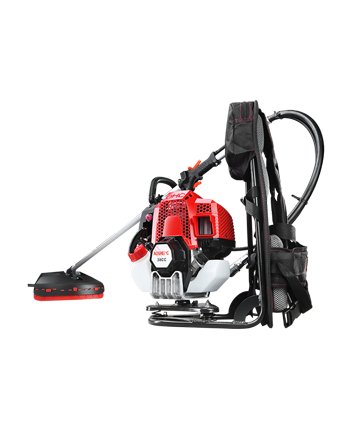
High-performance 4-stroke engine,displacement is 38CC. Professional use in the open-up wasteland Tube size 26mm*1.5mm, strength flexible shaft.Cutting width is 420mm Life time over 150hours New design...
See Details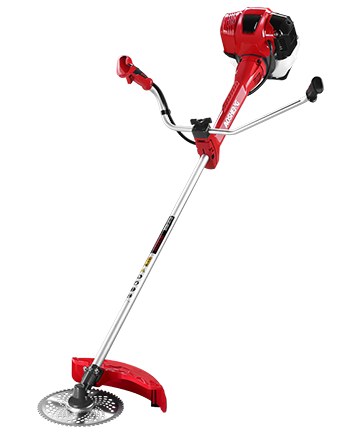
Professional engine, strength power. low consumption, easy to start.Rotating 360°The pole part uses a damper cover. The control handle can rotate 180° to decrease absorption. Rubber-covered handles ma...
See Details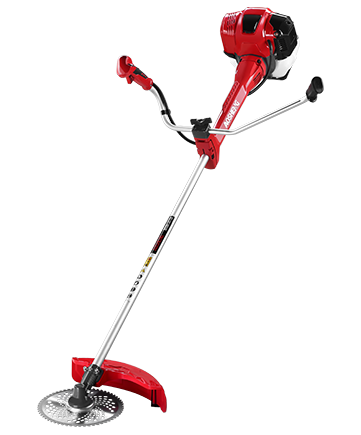
Professional engine, strength power. low consumption, easy to start. Rotating 360° The Pole part uses a damper cover. The control handle can be rotated 180° to decrease absorption. Rubber-covered hand...
See Details