

 English
 Español


news
Home / News / Industry News / Engine Only Runs With the Choke On: Causes and Fixes for Small Engines
Home / News / Industry News / Engine Only Runs With the Choke On: Causes and Fixes for Small Engines

Content
A landscaping crew calls in from a roadside green belt with a familiar complaint: the knapsack brush cutter fires up on half choke, runs for two minutes, then dies the moment the choke lever goes back down. Lift the lever again and the engine keeps going — rough, loud, short of power, but running.
The reflex is to order a new carburetor, and that reflex usually costs a week of working time. An engine that will only run with the choke on is rarely suffering from a failed carburetor; it is being fed a mixture that has gone too lean to burn, and the choke is hiding the symptom rather than causing it.
The choke plate is a butterfly valve that blocks air at the carburetor inlet. Close it and manifold vacuum rises, the main jet is pulled harder, and more fuel is drawn through the same opening — a deliberately rich mixture, the mechanical equivalent of a shot of starting fluid.
On a warm engine, full choke should flood the engine and stall it. When the opposite happens, the base fuel-air ratio is already wrong. Two families of faults produce that condition:
Every check below exists to decide which family you are in before any money is spent.
Work from the cheapest and most likely to the most invasive.
| Symptom | Most likely cause | Field test | Action |
|---|---|---|---|
| Runs on choke, dies within 30 seconds of opening it | Blocked cap vent or clogged tank screen | Run with the cap loosened | Clean or replace the cap vent, flush the tank, renew the filter |
| Runs on half choke, surges, no power under load | Varnished main jet or emulsion tube | Remove the jet and inspect it against a light | Ultrasonic clean or replace the carburetor body |
| Idles on choke, refuses to accelerate | Intake gasket, insulator O-ring or crank seal leak | Apply soapy water to the joints with the engine idling | Replace gaskets and seals, retorque the manifold |
| Cold starts fine, needs choke again when hot | Weak ignition coil, sheared flywheel key, tight valve clearance | Spark tester, then leak-down or valve gauge | Replace the coil, reset valve clearance |
| Smells strongly of fuel and still needs choke | Carbon-blocked spark arrestor or exhaust port | Remove the screen and inspect the mesh | Clean or replace the arrestor screen |
A two-stroke carburetor has no pump of its own; it relies on pressure pulses from the crankcase. A cracked pulse hose, loose pump cover screws or worn crank seals weaken that signal, and the engine leans out at every throttle position. Because the crankcase must also seal against the intake charge, a leaking seal adds air as well as losing pulse strength. That is why knapsack brush cutters, mist dusters and small water pumps so often run only on choke after a few hard seasons. Replace the pulse line and pressure-test the crankcase before touching jetting.
Four-stroke engines add a float bowl, a needle valve and, on many models, an anti-backfire solenoid that cuts fuel when the ignition is switched off. A float tang bent by years of vibration lowers the level in the bowl; a solenoid plunger that no longer retracts fully blocks part of the main circuit. Both leave the engine needing choke to stay alive. Verify the fuel level against spec first, then confirm the solenoid clicks and pulls back when the ignition is on.
Fuel problems are visible; air leaks are not. The joints between the carburetor and the cylinder — the insulator block, its O-rings, the manifold gaskets and the throttle shaft — all sit downstream of fuel metering, so any air they admit leans the mixture across the entire range. With the engine idling, brush soapy water around each joint and watch for a change in note or a trail of bubbles. Do not use carburetor cleaner for this test; it is flammable and a backfire will find it. Vibration loosens manifold bolts on hand-held equipment, so retorque them at every service instead of waiting for a failure.
Occasionally the engine is not lean at all — it simply cannot ignite the mixture it has. A weak coil, a plug fouled by the same rich running, a flywheel key that has partially sheared, or a spark arrestor packed with carbon all produce a machine that behaves better on choke, because a richer mixture lights more easily and a restricted exhaust raises residual gas in the cylinder. If the engine will not fire even at full choke, you are in a different fault pattern; our notes on gasoline engine start-up failures in garden machinery cover that sequence. Ignition and exhaust checks are cheap, so run them before the carburetor comes off.
For a fleet, a choke-only engine is an availability problem, not a curiosity. When a crew loses a brush cutter on a Tuesday morning, the cost is not the carburetor — it is the contract. The practical questions at purchase time are whether the carburetor can be reached without lifting the engine out of the frame, whether fuel lines and gaskets are stocked as individual service parts, and whether the jetting is documented well enough for a technician to return the machine to spec instead of guessing.
Our shoulder-type gasoline brush cutters, including the CG430GX, keep the fuel path short and the fasteners standard so a lean-running condition can be traced in the field rather than at a bench.
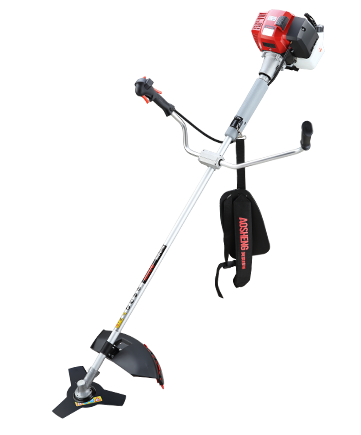 CG430GX Professional Gasoline Brush Cutter for Field MaintenanceProfessional 43cc shoulder brush cutter with a short fuel path and standard fasteners, making lean-running checks easier in the field.View Product →
The same logic applies to saws and spraying equipment, where a clogged filter or a hardened fuel line is far more common than a worn piston. The AS5200A chainsaw uses a conventional carburetor layout that responds predictably to the checks above.
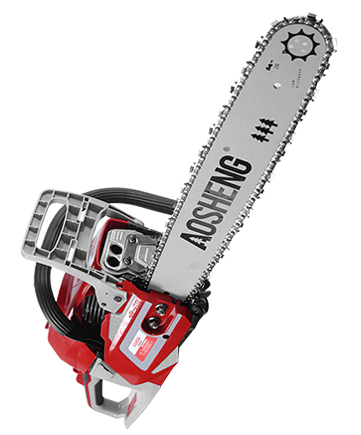 AS5200A 20-Inch Gasoline Chainsaw with Conventional CarburetorGasoline chainsaw with a conventional carburetor layout, designed for predictable field checks and a service life over 150 hours.View Product →
For agricultural and public-health spraying, the 3WF3GX knapsack mist duster keeps the air filter, primer and fuel lines within reach of a routine service, which matters when a unit is working six days a week through a pest-control season.
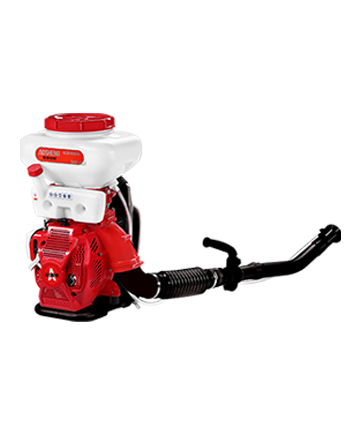 3WF-3GX Professional Knapsack Mist Duster for Plant ProtectionKnapsack mist duster for agricultural and public-health spraying, with accessible air filter, primer and fuel lines for routine service during pest-control seasons.View Product →
Consumables — filters, primer bulbs, fuel lines, gaskets, seals and carburetor assemblies — are listed as separate parts, because those are the items that actually fail. If you need help matching a part to a machine, our service team can work from the model number and engine code.
An engine that will only run with the choke on is telling you something specific: the mixture it needs to stay alive is richer than the mixture it is being given. Treat the choke as a gauge rather than a fault. Confirm that fuel is arriving, confirm that air is not arriving where it should not, and confirm that the ignition can light what the carburetor delivers. Most of the time the answer costs a filter, a gasket or a length of fuel line — and the carburetor everyone wanted to replace was never the problem.
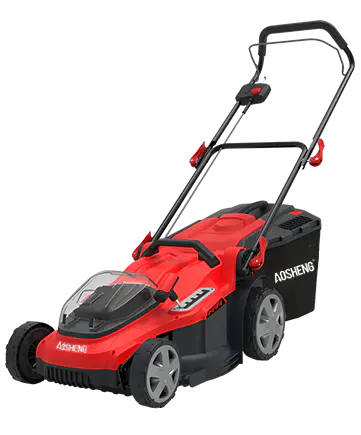
Deck Size:40CM/16INCH 3-in-1 function: Mulching, rear bagging&side discharge Easy-to-use fold-in system
See Details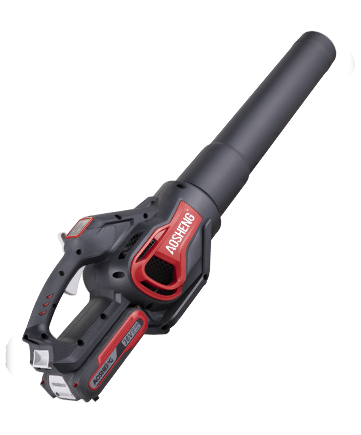
Turbine boost functionBig air volumeInstant startBackpack option for extra battery power
See Details
Extension height of 400cmOregon Bar & ChainTool-less chain tension systemAutomatic oiling systemBackpack option for extra battery power
See Details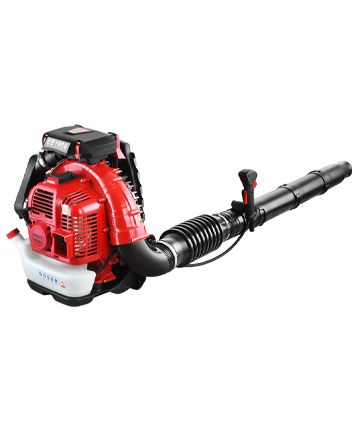
Extremely comfortable adjustable handle Large capacity fuel tank The largest air volume in China Use fire-retardant pipes to extinguish the fire Luxury widen & thicken straps Patented engine reac...
See Details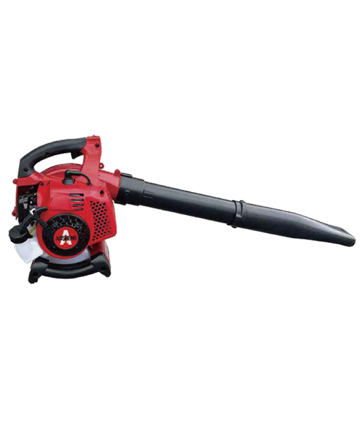
Suction and blowing Euro 5 certification Rubber-coverd handle, Strength nylon collecter.
See Details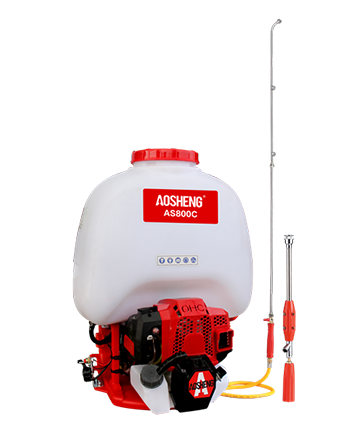
High preformence engine with high quality accessories. Copper meterial pressure pump, corrosion resistance.high atomization effect. Used in agriculture,eqidemic prevention, and disinfection.
See Details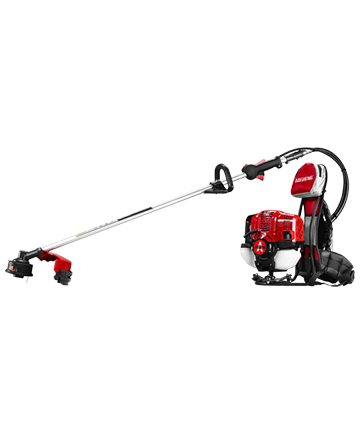
Professional engine, strength power.low consumption, easy to start.Rotating 360°Comfortable control handle and sponge belt. The trimmer head can offer a 460mm cut width. alloy blade diameter is 10 inc...
See Details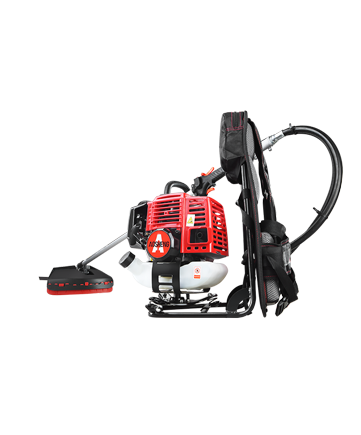
High-performance engine, displacement is 33CC.Professional use opens up wastelandTube size 26mm*1.5mm, strength flexible shaft.Cutting width is 420mmLifetime over 150hours
See Details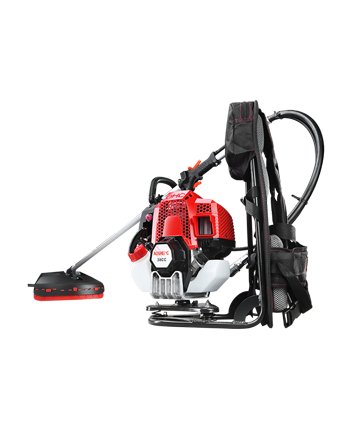
High-performance 4-stroke engine,displacement is 38CC. Professional use in the open-up wasteland Tube size 26mm*1.5mm, strength flexible shaft.Cutting width is 420mm Life time over 150hours New design...
See Details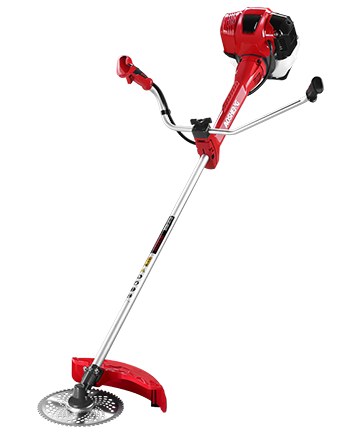
Professional engine, strength power. low consumption, easy to start.Rotating 360°The pole part uses a damper cover. The control handle can rotate 180° to decrease absorption. Rubber-covered handles ma...
See Details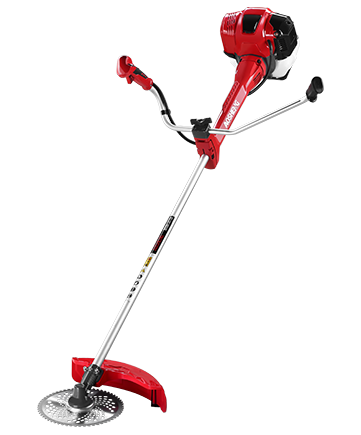
Professional engine, strength power. low consumption, easy to start. Rotating 360° The Pole part uses a damper cover. The control handle can be rotated 180° to decrease absorption. Rubber-covered hand...
See Details