

 English
 Español



news
Home / News / Industry News / How to Adjust a 2-Stroke Carburetor: Step-by-Step Tuning for Brush Cutters
Home / News / Industry News / How to Adjust a 2-Stroke Carburetor: Step-by-Step Tuning for Brush Cutters

Content
Your brush cutter starts on the first pull, idles for ten seconds, and then dies as soon as you open the throttle. Or it stays running but races at idle, smokes, and stumbles under load. Before you take the carburetor apart, try the fix that solves most of these complaints on small two-stroke engines: adjusting the three screws on the carburetor body. These screws let you match the fuel-air mixture to idle, low speed, and full throttle, and most machines only need a small screwdriver and five to ten minutes.
Carburetor adjustment is the last step, not the first. A two-stroke engine needs fresh fuel at the correct ratio, a clean air filter, and a spark plug in good condition. Skip one of those, and the carburetor screws will not give you a clean idle no matter how carefully you set them.
If the machine is new, some of these symptoms are covered in our guide to solving newly purchased brush cutter problems, because factory settings can be far off from what your fuel requires.
A typical diaphragm carburetor on a brush cutter, chain saw, or mist duster has three screws. The L screw controls the fuel mixture at idle and low throttle. The H screw controls the mixture at full throttle. The idle screw, often marked T, I, or LA, sets the throttle plate opening at idle.
| Screw | What it controls | Too far out (rich) | Too far in (lean) |
|---|---|---|---|
| L | Mixture at idle and low throttle | Smoky idle, bogs when you snap the throttle | Hesitates off idle, stalls in transition |
| H | Mixture at full throttle | Four-strokes at full RPM, sooty plug, smoke | Overheats, sounds sharp, risk of seizure |
| Idle (T/I) | Throttle plate opening at idle | Idle RPM too high, cutting head spins | Engine stalls when you release the throttle |
On machines like our G45 2-stroke brush cutter, the L screw sits at the base of the carburetor body and can be reached without removing the air filter. The H screw sits higher and usually has a rubber cap for weather protection.
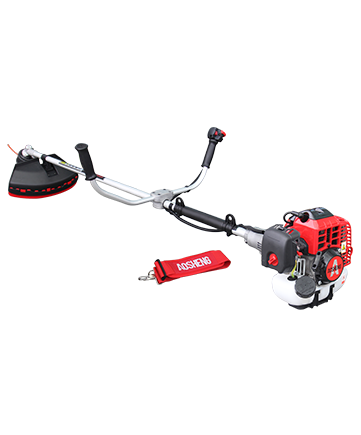 G45 2-STROKE GASOLINE BRUSH CUTTERCRAFTSMANSHIP 1. The bike handle grip part is covered with softrubber, which is more ergonomic2.Aluminum gearbox provides professional quality and longer use life3.Str...View Product →
Follow these steps in order. The engine must be warmed up before any mixture screw setting means anything, because a cold engine runs on the choke and the idle circuit behaves differently.
The BG350AGX knapsack 2-stroke brush cutter follows the same procedure. Its H screw is behind a rubber plug near the top of the carburetor, so you can pop the plug out without tools and keep the setting protected from dust.
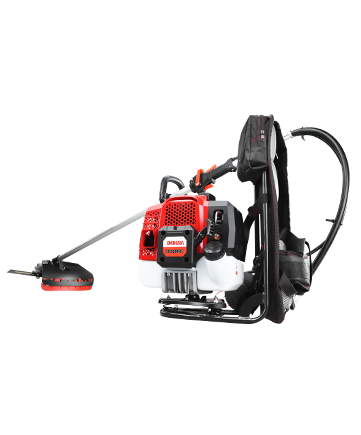 BG520GX Knapsack 2 Stroke Brush CutterHigh-performance engine, displacement is 52CC. Professional use in the open-up wasteland The tube size is 26mm*1.5mm, and the strength is the flexible shaft. Cutting w...View Product →
Most tuning mistakes come from not knowing which direction to turn. Lean means too much air in proportion to fuel. Rich means too much fuel. The difference is written on the spark plug and in the exhaust behavior.
Sometimes the engine still runs badly no matter how you set the screws. That points to a problem outside the adjustment range.
On the 3WFTU43 2-stroke mist duster, the same rule applies: set H slightly rich of peak RPM, since sustained full-throttle spraying puts the engine near its thermal limit for long periods.
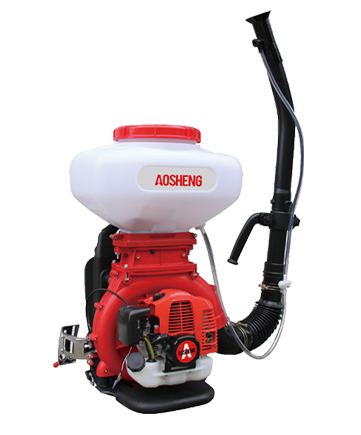 3WF-TU43 2-STROKE GASOLINE MIST DUSTERDisease and insect pest prevent of cotton ,wheat, rice, fruit tree, tea tree and other agricultural and forestry crops.View Product →
If a repair is beyond your time budget, our full range of gasoline-powered garden tools includes 2-stroke models designed so that routine tuning stays simple and parts are easy to reach.
Write your final settings down. A baseline such as "L at 1-1/4 turns, H at 1-1/8 turns from seated, idle set at 2,400 rpm" gives you a reference when you change altitude, season, or fuel blend. Re-tune only in small steps, always slightly richer on the H side, and never let the machine idle for long periods while you are away. If the numbers you end up with are far from the manual's starting point, the reason is usually wear or an air leak, so inspect before you keep turning.
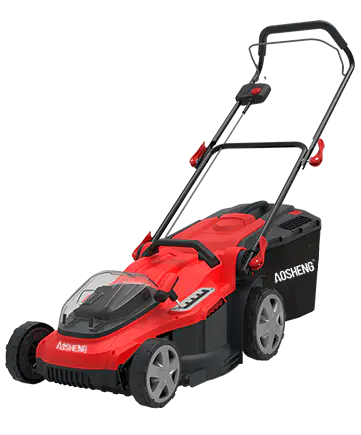
Deck Size:40CM/16INCH 3-in-1 function: Mulching, rear bagging&side discharge Easy-to-use fold-in system
See Details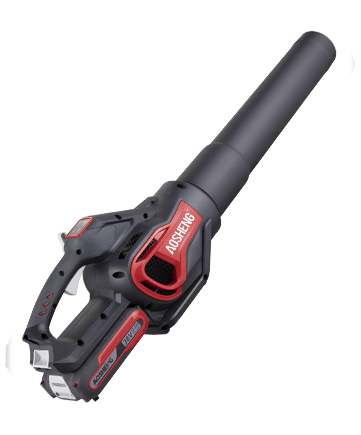
Turbine boost functionBig air volumeInstant startBackpack option for extra battery power
See Details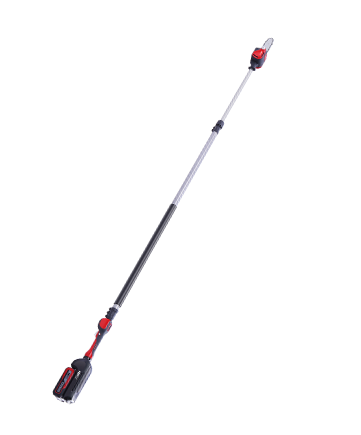
Extension height of 400cmOregon Bar & ChainTool-less chain tension systemAutomatic oiling systemBackpack option for extra battery power
See Details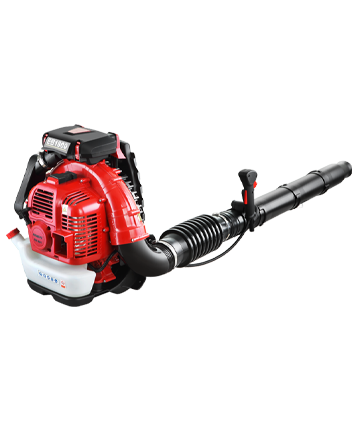
Extremely comfortable adjustable handle Large capacity fuel tank The largest air volume in China Use fire-retardant pipes to extinguish the fire Luxury widen & thicken straps Patented engine reac...
See Details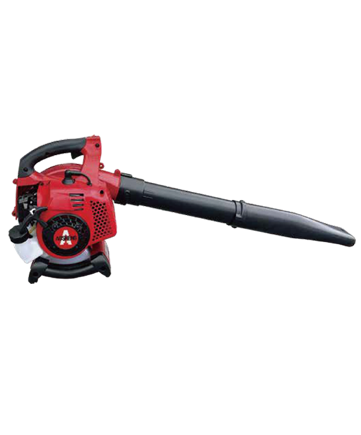
Suction and blowing Euro 5 certification Rubber-coverd handle, Strength nylon collecter.
See Details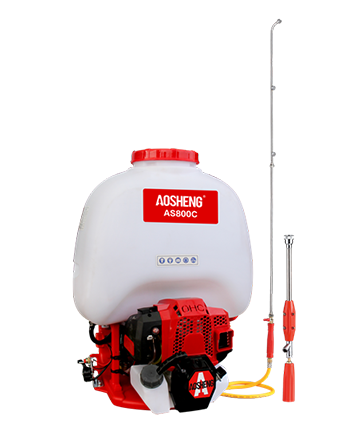
High preformence engine with high quality accessories. Copper meterial pressure pump, corrosion resistance.high atomization effect. Used in agriculture,eqidemic prevention, and disinfection.
See Details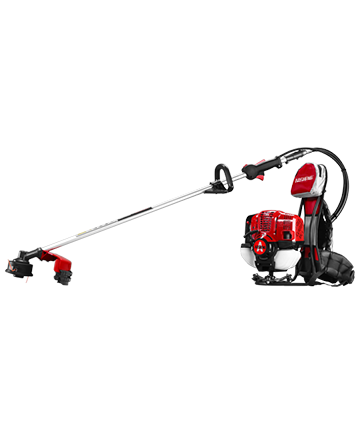
Professional engine, strength power.low consumption, easy to start.Rotating 360°Comfortable control handle and sponge belt. The trimmer head can offer a 460mm cut width. alloy blade diameter is 10 inc...
See Details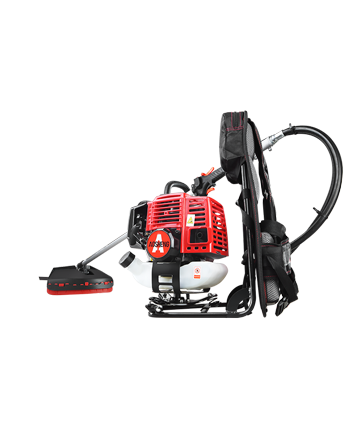
High-performance engine, displacement is 33CC.Professional use opens up wastelandTube size 26mm*1.5mm, strength flexible shaft.Cutting width is 420mmLifetime over 150hours
See Details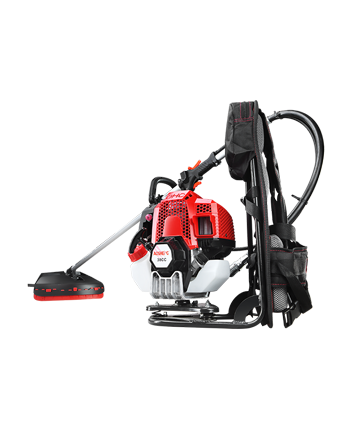
High-performance 4-stroke engine,displacement is 38CC. Professional use in the open-up wasteland Tube size 26mm*1.5mm, strength flexible shaft.Cutting width is 420mm Life time over 150hours New design...
See Details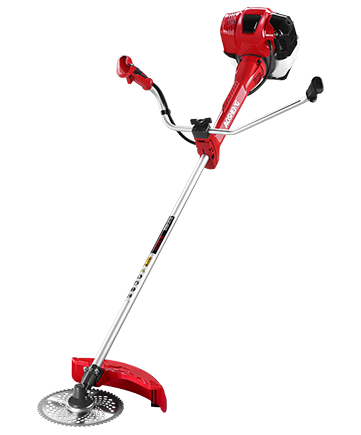
Professional engine, strength power. low consumption, easy to start.Rotating 360°The pole part uses a damper cover. The control handle can rotate 180° to decrease absorption. Rubber-covered handles ma...
See Details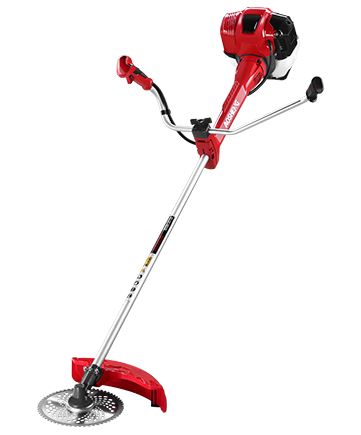
Professional engine, strength power. low consumption, easy to start. Rotating 360° The Pole part uses a damper cover. The control handle can be rotated 180° to decrease absorption. Rubber-covered hand...
See Details