

 English
 Español


news
Home / News / Industry News / How Does a Carburetor Work on a Small Engine? Float-Type Carburetor Explained
Home / News / Industry News / How Does a Carburetor Work on a Small Engine? Float-Type Carburetor Explained

Content
You pull the starter cord on your brush cutter or lawn mower, and the engine sputters once, then dies. Or it starts, but idles roughly and stalls as soon as you open the throttle. In most cases, the fault traces back to a single component: the carburetor. This small mechanical device, found on virtually every gasoline-powered lawn mower, brush cutter, chainsaw and water pump, is responsible for mixing air and fuel in the correct proportion and delivering that mixture to the engine. Knowing how it works is the foundation for diagnosing starting trouble, understanding adjustment screws, and maintaining outdoor power equipment so that it starts reliably for years.
Gasoline must be mixed with air in a narrow range of proportions to burn properly. The chemically ideal mixture is roughly 14.7 parts of air to 1 part of gasoline by mass, a ratio called stoichiometric. In practice, small air-cooled engines are tuned to run slightly richer than this, especially under heavy load, because the excess fuel cools the combustion chamber and helps prevent overheating. The carburetor is the device that meters this mixture and converts the liquid fuel into a fine spray that can vaporize quickly.
The force that drives the whole process is the engine itself. When the piston moves down on the intake stroke, it creates a low-pressure area. Atmospheric pressure then pushes air through the carburetor, and the carburetor injects fuel into that moving airflow. The fuel is atomized into tiny droplets, which vaporize as they travel toward the cylinder, producing a charge that will burn quickly and smoothly once ignited by the spark plug.
This principle explains the carburetor's central role: it must respond to the engine's changing airflow, supply more fuel when the throttle opens, and enrich the mixture when the engine is cold. Every design feature of a small engine carburetor, from the float bowl to the jets, exists to serve one of those functions.
Most small engines use a float-type carburetor, so named because a small float keeps the fuel level in the reservoir constant. Understanding each component makes it much easier to see how the whole unit operates.
| Component | Function |
|---|---|
| Float bowl | Reservoir that holds a ready supply of fuel below the carburetor body. |
| Float | Buoyant lever that rises and falls with the fuel level in the bowl. |
| Needle valve | Opens and closes the fuel inlet as the float moves, maintaining a steady fuel level. |
| Venturi | Narrowed passage that accelerates airflow and lowers air pressure to draw fuel upward. |
| Main jet | Precisely sized orifice that meters fuel delivery at higher engine speeds. |
| Idle jet | Smaller orifice that supplies fuel when the throttle is nearly closed. |
| Throttle plate | Butterfly valve that regulates the volume of air-fuel mixture entering the cylinder. |
| Choke plate | Restricts airflow during cold starts to create a richer mixture. |
The float bowl and float assembly are often called the fuel metering system, while the venturi, jets and throttle belong to the air and mixture control system. When one half fails, the symptoms usually point you in the right direction: fuel delivery problems tend to cause flooding or starvation, while air-side problems cause hunting, leaning and backfiring.
The operation begins with fuel delivery from the tank. Fuel flows through the fuel line and past the needle valve into the float bowl. As the bowl fills, the float rises. When the fuel reaches the correct level, the float pushes the needle valve shut, stopping further inflow. When the engine consumes fuel, the float drops and the needle valve lifts, allowing more fuel in. This cycle keeps the fuel level constant within a few millimetres, which is essential because a level that is too high or too low will change the amount of fuel the jets deliver.
When the engine turns over, the intake stroke pulls air through the air filter and into the carburetor throat. The venturi narrows the passage, so the air accelerates and its pressure drops. The fuel in the bowl, sitting at atmospheric pressure, is then pushed by the pressure difference through the main jet and into the venturi, where it enters the airstream as a fine spray.
The throttle plate sits between the venturi and the intake manifold. At idle, the plate is almost closed, and the small gap between the plate and the bore creates a strong vacuum on the downstream side. The idle jet, positioned below the throttle plate, meters fuel for this condition. As the throttle opens, airflow increases through the venturi, and the main jet gradually takes over fuel delivery. This two-circuit design ensures a smooth transition from idle to full speed without a flat spot.
The same principle applies regardless of engine type. On a 2-stroke engine, the fuel-air mixture passes through the crankcase first, and the fuel carries the lubricating oil. On a 4-stroke engine, the mixture goes directly into the cylinder, and oil is handled separately. A 4-stroke gasoline lawn mower relies on the same float-type carburetor as any other small four-stroke, with jet sizes and venturi dimensions tuned to the engine's displacement and power output.
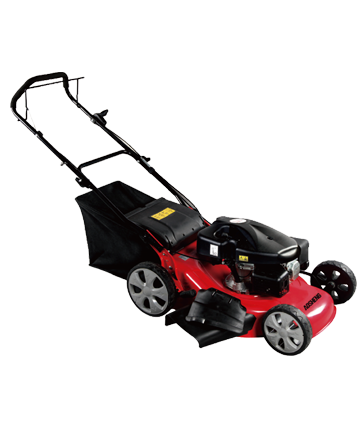 Wholesale AS20TA173HA 4-STROKE GASOLINE LOWN MOWER Suppliers, OEM/ODM Company - Ningbo Aosheng Machine Co., Ltd is a China AS20TA173HA 4-STROKE GASOLINE LOWN MOWER suppliers and company, specializing in wholesale AS20...View Product →
The choke is a plate upstream of the venturi that restricts the amount of air entering the carburetor. When the engine is cold, gasoline does not vaporize easily. With less air passing through the venturi, the pressure drop becomes stronger, and the carburetor draws proportionally more fuel from the bowl. The result is a rich mixture that an engine with cold cylinder walls can actually fire on. Once the engine warms up, the choke must be opened to return the mixture to normal. Leaving it closed for too long will flood the engine with liquid fuel, washing oil off the cylinder walls and making restarting even harder. This is why small engines are fitted with a choke lever or automatic choke rather than relying on the fuel system alone, as described in this explanation of why small engines need the air door for starting.
Because the carburetor depends on tiny precisely drilled openings and a clean fuel path, it is the most failure-prone component of a small engine. Dirt, water, stale fuel and simple wear all show up as specific symptoms.
| Symptom | Likely cause | Mechanism |
|---|---|---|
| Hard starting when cold | Clogged idle jet or faulty choke | The engine cannot get enough fuel to fire in cold conditions. |
| Rough idle | Dirty pilot jet or air leak | The idle circuit delivers an inconsistent mixture. |
| Surging at steady throttle | Partially blocked main jet or low float level | Fuel delivery fluctuates, causing the engine to hunt. |
| Flooding | Stuck needle valve or punctured float | Fuel overflows the bowl and enters the intake. |
| Stalling under load | Fuel starvation or dirty fuel filter | The engine cannot draw enough fuel to match demand. |
| Poor running after storage | Gum and varnish from stale ethanol fuel | Jets and passages become coated with sticky deposits. |
If the machine has sat for months with fuel in the bowl, the first step is almost always a carburetor cleaning. Deposits from oxidized gasoline do not dissolve in fresh fuel; the carburetor must be disassembled and the jets and passages cleaned with solvent and compressed air. This procedure, along with checking the fuel filter and fuel lines, is a reliable way to address starting complaints without replacing parts. Without this care, even a reliable 2-stroke knapsack brush cutter will eventually develop the same starting symptoms as any other machine with a neglected fuel system. The sequence is covered in more detail in our guide to solutions for gasoline engine starting failure.
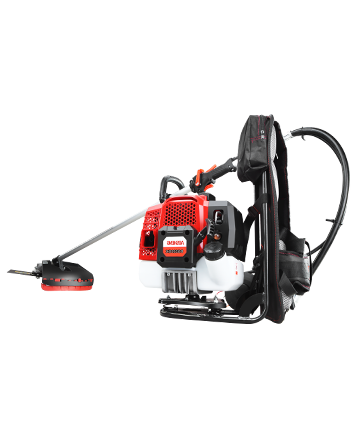 Wholesale BG520GX Knapsack 2 Stroke Brush Cutter Suppliers, OEM/ODM Company - NNingbo Aosheng Machine Co., Ltd is a China BG520GX Knapsack 2 Stroke Brush Cutter suppliers and company, specializing in wholesale BG520...View Product →
Understanding the carburetor helps in two practical ways. The first is troubleshooting: when a machine will not start, you can quickly narrow the cause to fuel, spark or compression, and within the fuel system, to the carburetor, fuel line or fuel filter. The second is purchasing: the design of the carburetor and the quality of the surrounding components tell you a lot about how a machine will behave in real use. An accessible air filter, well-protected fuel lines and a carburetor that is easy to remove and clean are signs that long-term serviceability has been built in.
This is where an established manufacturer makes a difference. Our gasoline-powered equipment, including the professional gasoline chainsaw, uses float-type carburetors that are matched to each engine's displacement, intake flow and operating range. The jet sizes and idle settings are calibrated at the factory, and the carburetor is positioned so that routine cleaning and adjustment do not require disassembling the whole machine. When carburetor service becomes necessary, the parts are standard sizes and the adjustment screws follow accepted small-engine practice, so technicians with equipment experience will know exactly what to do.
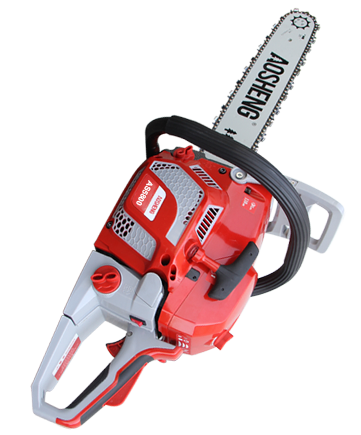 Wholesale AS5800A Powerful Chainsaw Suppliers, OEM/ODM Company - Ningbo Aosheng Ningbo Aosheng Machine Co., Ltd is a China AS5800A Powerful Chainsaw suppliers and company, specializing in wholesale AS5800A Powerful Ch...View Product →
The float-type carburetor has remained the standard on small engines for decades for one simple reason: it works well enough, at low cost, and can be repaired rather than replaced. Once you understand the venturi, the jets, the float and the choke, you can look at any small engine and know exactly what the fuel system needs to do. That understanding is one of the best maintenance tools you can own.
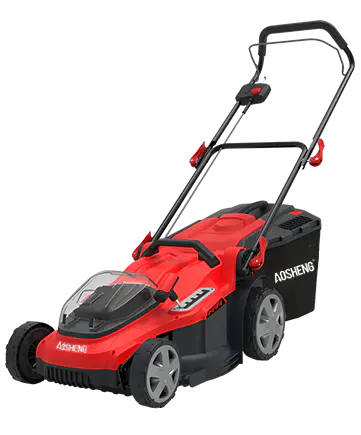
Deck Size:40CM/16INCH 3-in-1 function: Mulching, rear bagging&side discharge Easy-to-use fold-in system
See Details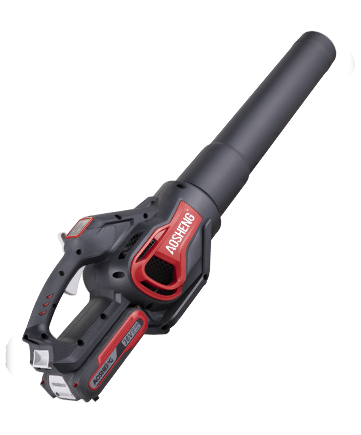
Turbine boost functionBig air volumeInstant startBackpack option for extra battery power
See Details
Extension height of 400cmOregon Bar & ChainTool-less chain tension systemAutomatic oiling systemBackpack option for extra battery power
See Details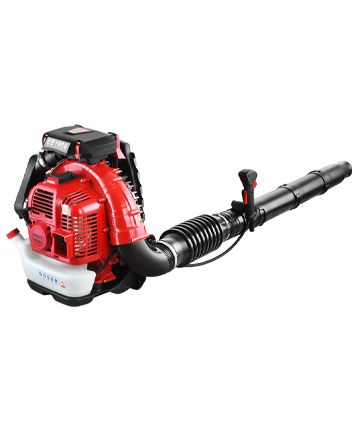
Extremely comfortable adjustable handle Large capacity fuel tank The largest air volume in China Use fire-retardant pipes to extinguish the fire Luxury widen & thicken straps Patented engine reac...
See Details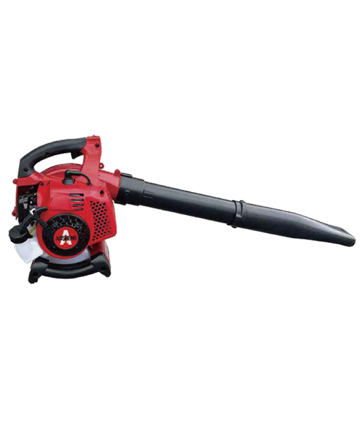
Suction and blowing Euro 5 certification Rubber-coverd handle, Strength nylon collecter.
See Details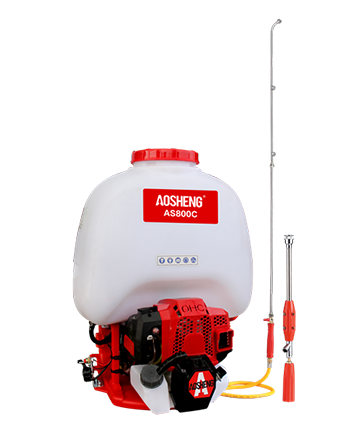
High preformence engine with high quality accessories. Copper meterial pressure pump, corrosion resistance.high atomization effect. Used in agriculture,eqidemic prevention, and disinfection.
See Details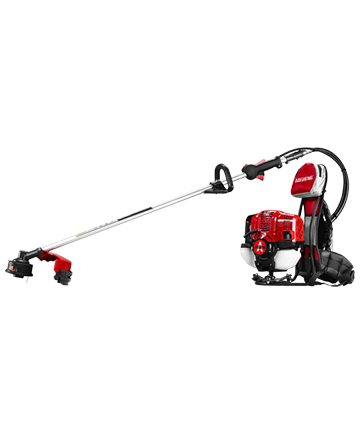
Professional engine, strength power.low consumption, easy to start.Rotating 360°Comfortable control handle and sponge belt. The trimmer head can offer a 460mm cut width. alloy blade diameter is 10 inc...
See Details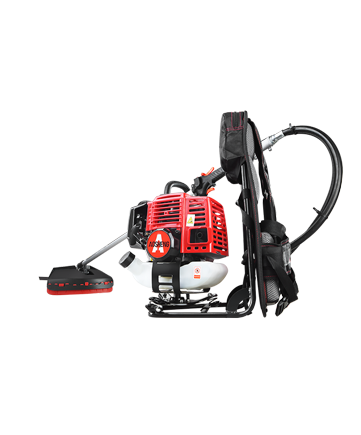
High-performance engine, displacement is 33CC.Professional use opens up wastelandTube size 26mm*1.5mm, strength flexible shaft.Cutting width is 420mmLifetime over 150hours
See Details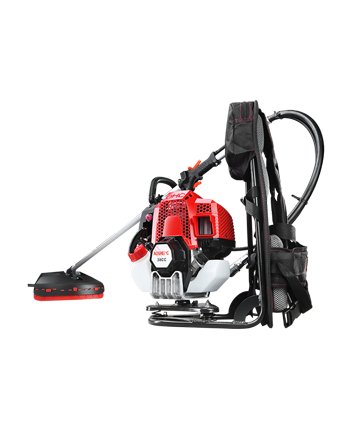
High-performance 4-stroke engine,displacement is 38CC. Professional use in the open-up wasteland Tube size 26mm*1.5mm, strength flexible shaft.Cutting width is 420mm Life time over 150hours New design...
See Details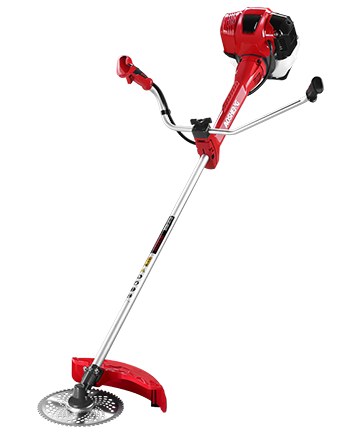
Professional engine, strength power. low consumption, easy to start.Rotating 360°The pole part uses a damper cover. The control handle can rotate 180° to decrease absorption. Rubber-covered handles ma...
See Details
Professional engine, strength power. low consumption, easy to start. Rotating 360° The Pole part uses a damper cover. The control handle can be rotated 180° to decrease absorption. Rubber-covered hand...
See Details